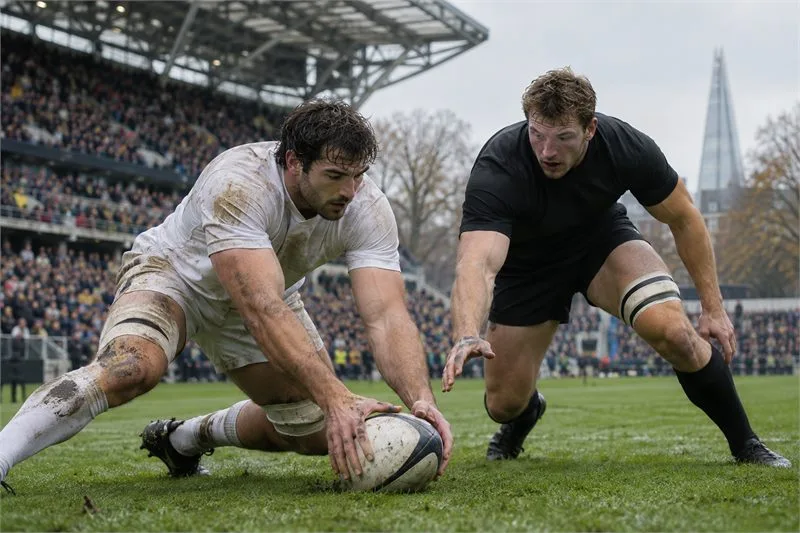
France vs. South Africa to Decide Nations Championship Title on Nov. 29
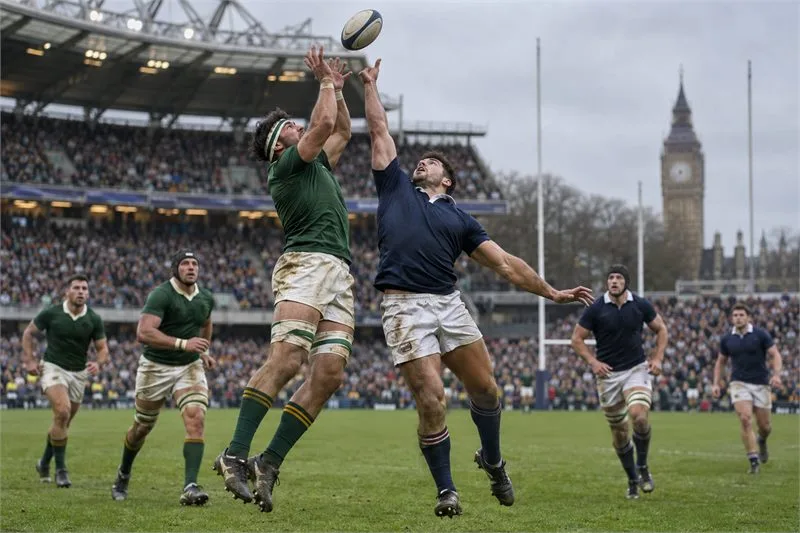
France and South Africa meet in the inaugural Nations Championship Grand Final at Allianz Stadium, Twickenham, on Nov. 29 at 4:40 p.m. GMT.
Last verified: November 14, 2026, 7:24 p.m. UTC (November 15, 2026, 2:24 a.m. Bangkok ICT, UTC+07:00). England beat Japan 78–15 in Nations Championship Round 5 at Allianz Stadium, Twickenham, on Saturday, November 14. The tournament’s official match center confirms full time, a 49–10 halftime lead and 13 England tries, five of them scored by winger Will Joseph.
The emphatic result gave England a fourth consecutive tournament win following its opening-round loss, while Japan recorded a fourth successive defeat after a Round 1 victory. Joseph’s five tries equaled England’s single-Test record, according to Reuters. England moved to second in the Northern Hemisphere standings after this result, although final standings and qualification implications remain dependent on the remaining fixtures.
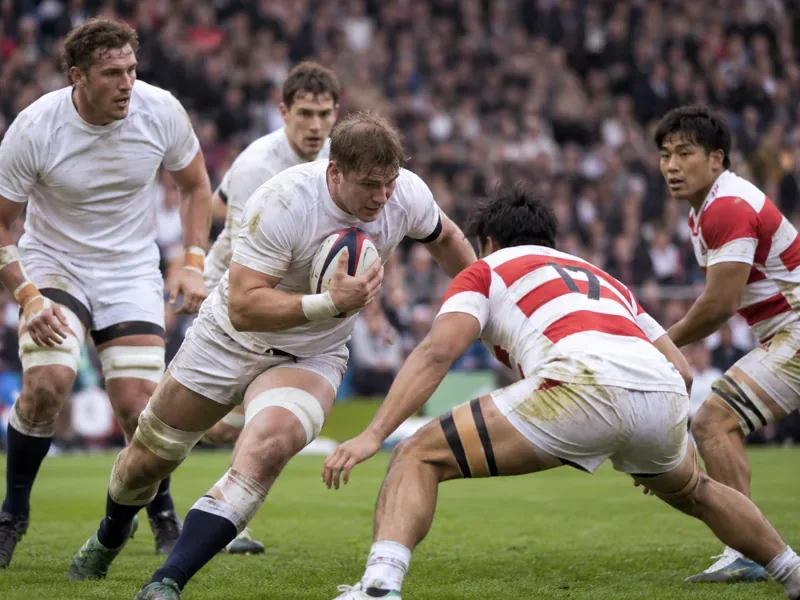
England won 78–15 at home, scoring 49 points before halftime and another 29 in the second half. Japan scored 10 in the first half and five more after the break. The official scoring record credits England’s tries to Will Joseph (five), Freddie Steward, Ellis Genge, Cadan Murley, Ben Earl, George Martin, Ben Curry, Marcus Smith and Greg Fisilau. Japan’s two tries came from Warner Dearns and Opeti Helu.
George Ford kicked a first-half penalty and three conversions for England, with Henry Slade adding two conversions. Naoto Saito supplied Japan’s penalty and converted Dearns’ try. Those scoring details reconcile with the official 78–15 total: England registered 65 points from tries, 10 from conversions and three from a penalty, while Japan registered 10 try points, two conversion points and three penalty points.
Joseph made an immediate impact, crossing in the opening moments and scoring four times in the first half. The official tournament record lists his tries in approximately the 1st, 9th, 19th, 24th and 55th match minutes. His fifth came after halftime from an interception, as reported by Reuters. This five-try performance equaled the England record previously achieved by Rory Underwood, Josh Lewsey and Henry Arundell.
His haul was exceptional, but England’s margin was not solely the product of one player: eight other England players crossed the try line. The variety of scorers illustrated the sustained attacking pressure applied throughout both halves. At the interval England had already built a 39-point advantage, leaving Japan with an extremely difficult task even before Joseph added his final try.
Japan found some scoring opportunities through Saito’s first-half penalty, a try by lock Warner Dearns before the interval and a second-half try by replacement Opeti Helu. Yet those moments were outweighed by England’s repeated breakthroughs. Japan lock Harry Hockings received an early card for a high tackle that was upgraded to a 20-minute red card, according to Reuters. That disciplinary episode further complicated Japan’s effort, although it should not be treated as the sole explanation for the final score.
England hooker Luke Cowan-Dickie was also shown a second-half yellow card. Despite that temporary numerical disadvantage, England continued to add tries and closed out the game comfortably. These are confirmed match incidents; attributing the entire result to any single decision would overlook England’s scoring efficiency and Japan’s wider defensive difficulties.
England’s published starting XV was Ellis Genge, Luke Cowan-Dickie, Asher Opoku-Fordjour, Maro Itoje, George Martin, Alex Coles, Ben Earl, Henry Pollock, Jack van Poortvliet, George Ford, Cadan Murley, Max Ojomoh, Henry Slade, Will Joseph and Freddie Steward. Its named replacements were Theo Dan, Emmanuel Iyogun, Joe Heyes, Arthur Clark, Ben Curry, Greg Fisilau, Archie McParland and Marcus Smith. The pre-match team sheet placed Smith at No. 23; he later scored one of England’s tries.
Japan’s published starters were Yota Kamimori, Mamoru Harada, Shuhei Takeuchi, Harry Hockings, Warner Dearns, Ben Gunter, Kanji Shimokawa, Jack Cornelsen, Naoto Saito, Riku Kitahara, Riku Tokito, Samisoni Tua, Dylan Riley, Kippei Ishida and Kazuma Ueda. The listed replacements were Kenji Sato, Sojiro Otsuka, Opeti Helu, Michael Stolberg, Tiennan Costley, Shinobu Fujiwara, Shinya Komura and Chiju Lee. These are the officially published team sheets, rather than a claim that all 46 players appeared.
The Round 5 fixture kicked off on Saturday, November 14, 2026, at 4:40 p.m. Greenwich Mean Time in London (GMT, UTC+00:00), which is 16:40 UTC. Because the United Kingdom had returned to standard time by that date, British Summer Time did not apply. The equivalent scheduled kickoff in Japan was Sunday, November 15, at 1:40 a.m. Japan Standard Time (JST, UTC+09:00). The venue was Allianz Stadium in Twickenham, London, and the official match referee was Damian Schneider.
The official match center’s results sequence now shows England with one loss and four wins through Round 5, while Japan has one win followed by four losses. Reuters reported that the victory lifted England to second in the Northern Hemisphere standings. That is a post-match position, not a declaration of a guaranteed place or final ranking.
The Nations Championship features Northern and Southern Hemisphere teams across six rounds before its Finals Weekend. England can carry attacking momentum into its remaining fixture, but later results may change its position. Japan must focus on its next opportunity after another defeat. Any specific Finals Weekend pairing or qualification claim should await the relevant confirmed standings and competition announcements.
Primary records: Nations Championship official final score and scoring timeline; Japan Rugby Football Union match record; Japan Rugby Football Union match roster announcement; Nations Championship competition website. Match analysis and standings context: Reuters match report, November 14, 2026.
England won 78–15 in Nations Championship Round 5 at Allianz Stadium, Twickenham.
Five. England scored 13 tries in total, and Joseph equaled the country’s single-Test try record.
England led Japan 49–10 at halftime before winning 78–15.
France and South Africa meet in the inaugural Nations Championship Grand Final at Allianz Stadium, Twickenham, on Nov. 29 at 4:40 p.m. GMT.
Official kickoff time, venue details, and tactical preview for the 2026 World Rugby Nations Championship 3rd-place playoff between Ireland and Australia at Twickenham.
Preview of the inaugural World Rugby Nations Championship playoff between Scotland and Argentina at Allianz Stadium, Twickenham, on Sunday, Nov 29, 2026.
England faces New Zealand in the inaugural Rugby Union Nations Championship Finals Weekend at Allianz Stadium, Twickenham. Kickoff, facts, and tactical preview.
Preview of Italy vs Fiji in the World Rugby Nations Championship 11th-place play-off at Allianz Stadium, Twickenham on November 27, 2026, including kickoff times and key factors.
Wales faces Japan in the 9th-place playoff at the inaugural 2026 World Rugby Nations Championship Finals Weekend at Twickenham on Nov 28, 2026. Official kickoff details, preview, and team impact.
Ireland and Australia meet at Allianz Stadium in the Nations Championship third-place playoff on November 27. Kickoff is 8:10 p.m. GMT; lineups are pending.
England and New Zealand meet at Allianz Stadium on November 28 in the Nations Championship second-place play-off. Kickoff is 4:40 p.m. GMT; lineups are pending.
France faces South Africa in the 2026 Nations Championship Grand Final at Allianz Stadium, Twickenham on Sunday, Nov 29, 2026. Kickoff set for 16:40 GMT.
Scotland faces Argentina in the 2026 Nations Championship 7th-place playoff at Allianz Stadium, Twickenham on Sunday, Nov 29, 2026. Kickoff time, venue, and team insights.